
HISTORY
THE BRUSUTTI FAMILY
According to many genealogists, the family descends from the ancient Roman gens Bruttia. The name Bruttius indicates origin from “Bruttium”, the southernmost region of ancient Italy, named after this noble and ancient family. The gens Bruttia distinguished itself from the late Republican period onward with figures such as: Bruttius Sura, legate of Gaius Sentius Saturninus, praetor in Macedonia in 88 BC; Brutius of the equestrian order, for whom Cicero wrote a “letter of recommendation-presentation” to Manius Acilius Glabrio, proconsul in Sicily in 46 BC; Brutius the philologist, a fellow student in Athens of the Arpinate; Lucius Brutius Maximus, proconsul in Cyprus in AD 80; Gaius Brutus, consul in AD 139 and again in AD 180; and Bruttia, from the noble Brutti family, who became a Roman empress and wife of Commodus. In any case, according to Venturini, this ancient and illustrious family traces its lineage to Marco, lord of Durazzo. The family, which had produced notable figures in the Roman Senate and in Roman diplomacy, later moved to northern Italy: one branch settled in what are now the regions of Friuli-Venezia Giulia and Veneto, where it distinguished itself through ability and diligence, giving rise to eminent men of arms and of faith; the other branch settled in Lombardy, where the family became owner of several fiefs, fought with honor to defend the territories entrusted to it, and rose to prominence in the city of Brescia. The Brusutti family therefore traces its origins back to antiquity. The surname has been modified several times in the form of expressions such as “dei Bruti”, “Brutti”, “dei Bruttius”, but both branches of the family share a common root in that Roman nobility founded on values such as justice, a sense of duty, and a love of learning; for these reasons, the family was granted the title of counts. The name evolved into “Brutti”, “Brusut”, “Brusuto”, “Brusutto”, and finally, from its Latin form, into “Brusutti”.
Of the Lombard branch, it is recorded that in the year 1330 Nero Brusatti served as ambassador for the Brescian Guelphs to the Scaliger lord Mastino, against the Ghibellines. Francesco Brusutti was, in the fifteenth century, a canon and archpriest of Santo Stefano, then bishop of Cassano, and later archbishop of Nicosia. He was a distinguished man and served as an ambassador for supreme pontiffs and monarchs, acting with virtue and charity. His uncle, Cardinal Roverella, had a temple built in his name to immortalize his memory. Around 1125, the Brusatti donated several castles in Valle Camonica to the city of Bergamo; likewise, Eustachio Brusati, nephew of Bishop Manfredo, in 1135 undertook efforts to reclaim the fief, demonstrating ability and honor.
Of the Friulian and Venetian branch, we recall Bonomo Brusutti, who in 1264 intervened in Verona, contributing substantial funds for the construction of the hospital of San Jacopo e Lazaro di Tomba
It is also worth noting Nicolò Brusatti, who served as a notary in Verona; Marco in 1406 and then Cristoforo in 1484 were members of Verona’s noble council. The fief of Zoppola, between the sixteenth and seventeenth centuries, is mentioned by Veronese in the book Signori e Sudditi; among the valiant men who defended it, particular note is made of the juror Zuan Domenego Brousutt. Giovanni Battista Della Porta, in his book “Memorie sulle case antiche di Udine”, recalls G. B. Brusutti, the leaseholder of one of the most beautiful villas in Udine. The family is then mentioned in the “Libro d’argento”, second volume, on noble Venetian families by Giovanni Dolcetti, together with the Camozzo, with whom they became related, and with the Dal Mistro family, from whom the Venetian branch originated; with the latter, they also became owners of a well-known furnace in 1797. In 1881, Giulio Rezasco lists the same family among the judicial officers and deputies of Udine, and they are later mentioned by Luchini in the history of Castions di Zoppola among the podestà of the seventeenth and eighteenth centuries.
They are again listed among the nobles of the illustrious families of the nineteenth century; the family is later mentioned among the brave who fell for the homeland between 1915 and 1918, with particular reference to the two officers Antonio Brusutti and Giovanni Brusutti, and once more in the war of 1940 with Luigi Brusutti
These are only a few of the many pieces of information and documentation on the ancient and solid roots of the Brusutti Family, drawn also from the Biblioteca Guelfi Camaiani (Guelfi Camaiani Library), the Italian Genealogical Institute, and the Biblioteca Storico-Araldica Genealogica (Historical–Heraldic Genealogical Library).
The family, in fact, produced numerous valiant officers in various wars, including those for the unification of Italy, and is mentioned for the merits they earned in battle, as well as for their charity in support of the pious works of the then Bishop of Vicenza, Baron Antonio Farina, who was later canonized. Distinguishing themselves through entrepreneurial ability and, following their significant diplomatic and military service, the family had been granted and confirmed in the title of “counts” by the Royal House of Savoy in the more recent history of unified Italy.
Today, the Brusutti family is closely linked to the world of industry.
Gino Brusutti is without doubt one of the most significant figures in Italy of the 1950s. Gifted with creative flair, he was also a master violinist, having graduated from the Benedetto Marcello Conservatory in Venice. He was a designer who conceived mechanical and technical patents of unrivaled ingenuity. He married Giulietta, of the Counts Vecchia, originally from Vicenza—a family later settled in Venice and also related to the Counts Savorgnan di Brazzà (the Savorgnan di Brazzà family counts among its distinctions those master cartographers employed by the navigator Christopher Columbus, as well as explorers and viceroys of the Belgian Congo). The Vecchia family, enrolled in 1778 in the Noble Council of Vicenza, had its nobility confirmed by sovereign decree on July 8, 1820 (Angelo and Alberto Della Vecchia had been decorated by Empress Maria Theresa with the title of Counts of Mantua, by diploma dated September 18, 1743).
Gino Brusutti effectively reshaped the family’s principal activity, transforming it definitively from agricultural and hotel pursuits into a company providing public and private passenger transport and related services, with the well-known and widely recognized workshops in the commercially vibrant Mestre—and, until the late 1940s, also engaged in the design, construction, and production of buses.
Gino Brusutti dedicated himself to creating the road networks for the provinces of Venice and Treviso, and he became politically involved as a technical expert in establishing a series of transport services intended to benefit the public—particularly Venetian workers during the difficult period of recovery immediately after the war (1945) and in response to their need to travel to the industries on the mainland. We should recall that in his time there were no transport departments or ministries, and he had to, as a pioneer, organize every type of service and system of mobility from the ground up. President Gino Brusutti was also the creator and first signatory—together with the Counts Marcello and Donà delle Rose, as well as Volpi di Misurata—of the first Representative Body of Enterprises and Industries of the Venetian territory, today known as Confindustria Venezia.
The history of the Brusutti company then passed to the brothers Giancarlo and Bruno, sons of Gino; the firm is considered the oldest public transport company in Venice and one of the oldest in Italy. Worthy of note is the creation of the first double-decker bus in Italy, conceived and patented, and entirely built in the workshops on historic Via Piave in Mestre. The importance and entrepreneurial significance of the project, as well as the ability and merit of Gino Brusutti and the entire family, were acknowledged by the first elected president of the Italian Republic, Luigi Einaudi. This recognition was recounted by the newsreel “Incom”, which documented the historic journey of the bus from the Venetian villas of Dolo and Mira to the Quirinale in Rome.
The current President is Bruno Brusutti, a geophysicist and meteorologist, who—after a career as an officer in the Italian Air Force—has devoted more than fifty years to entrepreneurial activity, with particular focus on promoting and implementing new European regulations in the field of passenger transport. A member of numerous regional and national transport commissions, he has held prestigious positions, including the Presidency of ANAV (the Italian National Association of Passenger Transport) for the Veneto region and other committees. He has received international awards and numerous honors, and was decorated by President Giorgio Napolitano with the title of Commander of the Order of Merit of the Italian Republic, as well as awarded an honorary degree in Transport Sciences by Constantinian University in the United States of America.
The family has carried out and supported countless works of charity and social initiatives; to name only a few: the 2000 restoration of the historic park on Via Torre Belfredo in Mestre; assistance and collaboration with the Casa Nostra Institute in Dolo (VE) in support of children removed from difficult situations; work in local parishes; support for AIL (Associazione Italiana contro le Leucemie-Linfomi e Mieloma, the Italian association against leukemia, lymphoma, and myeloma); the many sponsorships and collaborations with the City of Venice and various bodies and institutions for cultural and social initiatives; the creation of the “Angelo che Sorride” (“Smiling Angel”) award in memory of the Servant of God, Pope John Paul I, in collaboration with Her Royal Highness Princess Marionne Bernadotte of Sweden. On that occasion, an Honor Committee was formed, including Nobel Prize laureate Dario Fo, journalists Minoli and Zavattaro, and Senator for Life Giulio Andreotti, former President of the Council of Ministers.
values of Gino and Giulietta Brusutti, and upon the recommendation of the then President of the Republic, Giorgio Napolitano, the “Brusutti Foundation” was established, headquartered on the Island of San Servolo in Venice. Its mission centers on human, social, and entrepreneurial values, and it has become an internationally significant institution that carries out initiatives with strong cultural and social impact, with particular attention to the local area and to issues of pressing current relevance and collective interest. The Foundation is distinguished by an Honor Committee composed of Cardinals Jorge Medina Estévez, Darío Castrillón Hoyos, Velasio De Paolis, and Raffaele Farina. Its President “for Life” is Bruno’s son, Marco Eugenio Brusutti, who, through conferences and symposia, works as a technician and specialist on ethics across a wide range of operational fields. He holds a degree in sociology and a short-degree diploma in law, and is currently pursuing another academic qualification in religious sciences.
There have been fifteen generations, beginning in the 1300s, that first managed the agricultural and hotel business and, in the last three generations, expanded into transport, services, and airport parking. Even today, the family holds 51% of the company’s shares, while the remaining part is owned by the company ATVO S.p.A., once owned and controlled by the province of Venice, now the Metropolitan City of Venice.
The company, now also known for its large airport parking facilities near the Marco Polo terminal in Venice, serves as an interchange parking area used by Venetian residents from the islands, and for connections to Venice Lido Airport, Treviso Canova Airport, the Mestre train station, the Venice Passenger Terminal, and the Dolomites—beloved and widely known among international visitors as well.
Worthy of note is the management philosophy implemented by the family and recognized by Prof. Stefano Zamagni, professor at the University of Bologna and a well-known economist, chosen by Pope Benedict XVI as a consultant for the drafting of the encyclical Caritas in Veritate. He states: “…the entire difference between construction and creation is precisely this: a thing that is constructed can be loved only after it has been built, but a thing that is created is loved before bringing it into existence. The civil entrepreneur is therefore a creator in this precise sense and not a mere constructor. Such is the Brusutti company.”
We conclude by noting that in 2015 the President of the Republic and the Mayor of Venice recognized the merit and distinctive stature of Gino Brusutti by dedicating one of the city gates of Mestre—together with the “G. Brusutti” roundabout
—to him, near the monumental cemetery, opposite Santa Maria dei Battuti, on the route from the highway toward Via Giovanni da Verrazzano, the historic road leading to Venice.
An unforgettable journey through past, present, and future, discovering a family that stands as both symbol and driving force of the city of Venice—one that, through the patronage of various emperors, popes, and sovereigns, has traced a path across history, passing through the exemplary, reserved, and industrious life of Gino Brusutti, and culminating in a work such as the Foundation, dedicated to others in a higher pursuit of the good of one’s neighbor.
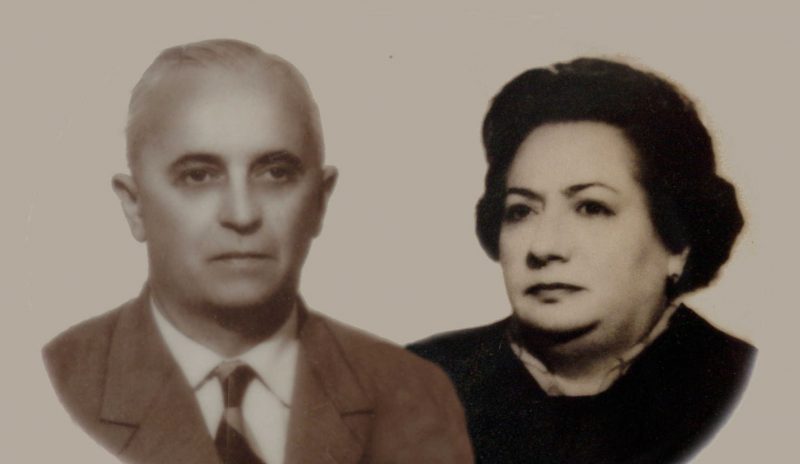
Gino and Giulia Brusutti
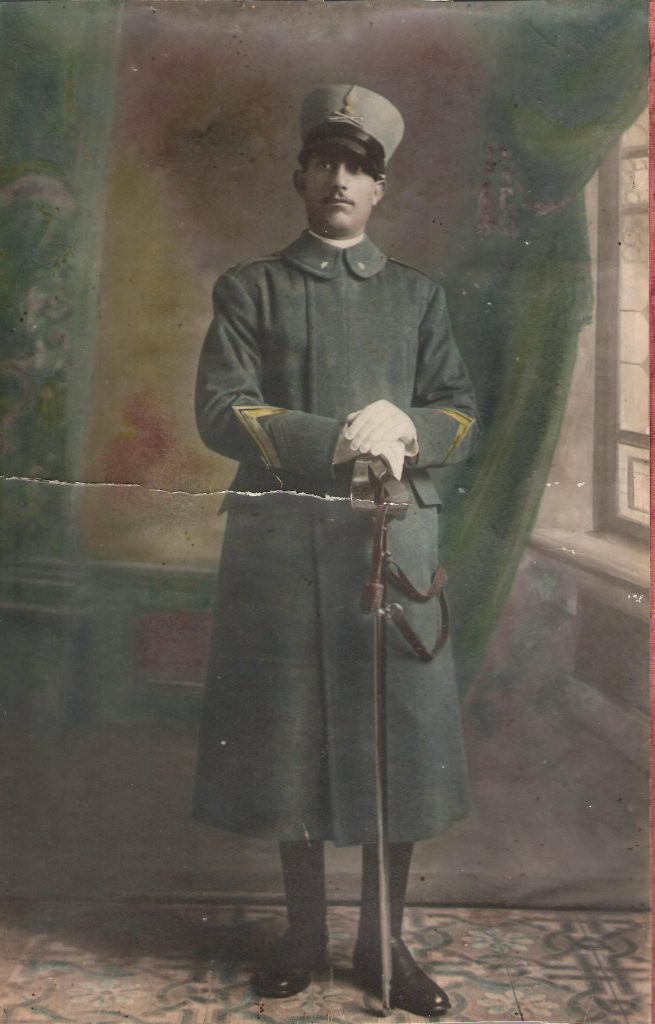
Pasquale Volpone Official of the Royal Household
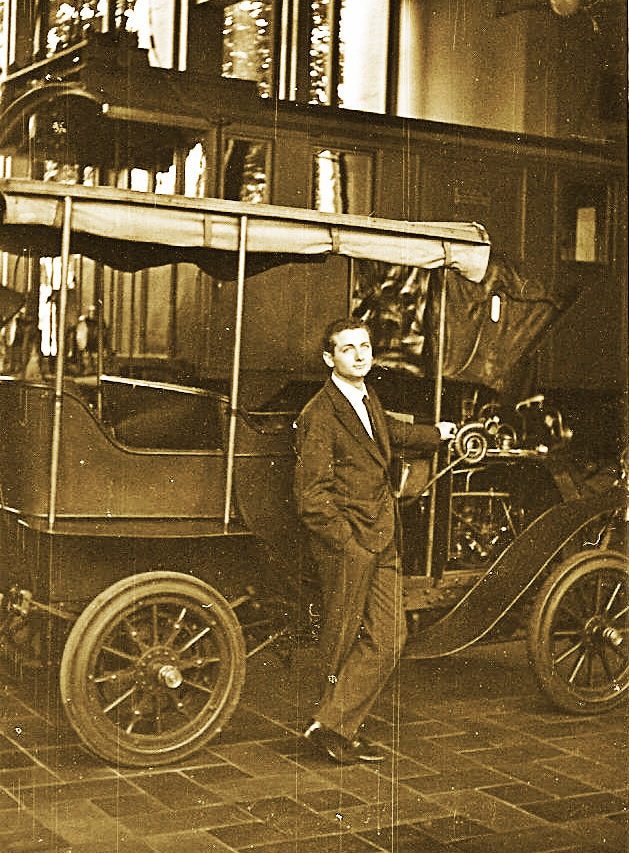
Bruno Brusutti with a vintage car
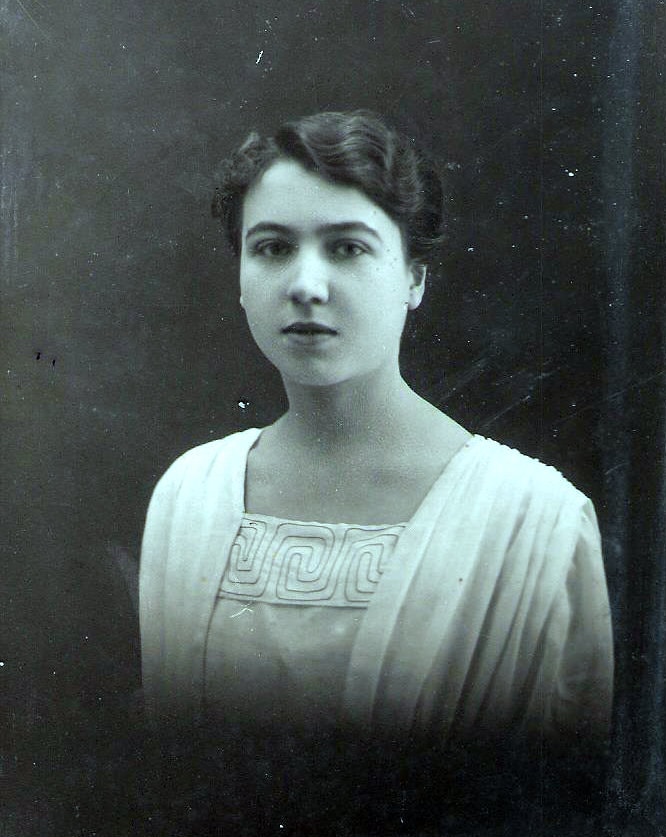
Rosina dei Baroni De Pascalis


